Want to Enter a Learning Flow State? Try This “Epic Study Playlist”
You open your textbook, read two paragraphs, and your eyelids start to droop. The first formula you write in your notebook marks the beginning of today’s drowsiness.
Maybe you’ve tried to save yourself – you play a song on your phone to wake up your brain, but the piano spills out like sleeping pills… and then you fall asleep at your desk.
You’re not alone.
Most “study background music” recommendations push relaxing, quiet, spa‑like instrumentals. But here’s the problem: if your brain is already in a low‑arousal state (tired, bored, resistant), a slow, predictable background will only accelerate the shutdown.
You need the opposite.
🎯 Why “Calming” Music Is Actually Bad for Deep Work
Most study playlists are built on the assumption that a quiet environment is best – and if you must add sound, it should be gentle white noise, rain, or soft piano. That approach works for some tasks. But for the vast majority of students and programmers, that kind of music backfires.
The core issue: if your brain is already stuck in “low‑battery” mode – fatigue, boredom, or just not wanting to start that difficult task – a calm, predictable background will only push it toward complete shutdown. You don’t need music that blends into the background. You need music that gently pulls your attention back.
This playlist is built on a completely different principle: study music should be “participatory,” not “passive.”
It’s loud, dramatic, and full of sweeping orchestral swells, hard‑hitting percussion, and heroic themes straight from Hollywood blockbusters. And it turns out – it really works.
A study from Georgetown University, published in PLOS One, found that certain types of instrumental music can simultaneously boost mood and productivity – after just 10 minutes of listening, students calmed their nerves and increased their pace. Even participants with high anxiety showed significant improvements in both work speed and accuracy.
Meanwhile, a 2024 study in Nature Communications Biology showed that music with specific rapid amplitude modulations can significantly enhance activity in brain regions related to attention – especially for people with attention difficulties (e.g., ADHD symptoms). In other words: the right kind of stimulating background music can push your brain into a state of relaxed alertness – focused enough to work, but not so engaged that the music itself becomes a distraction.
That’s exactly what this playlist is designed to do.
🧠 How “Epic” Music Reshapes Your Work State
Film composers know a secret that most study‑playlist curators don’t: music doesn’t just reflect emotion – it creates it. A well‑placed brass hit or a sudden shift in tempo can make an ordinary scene feel urgent, dangerous, or triumphant.
You can use that same trick on yourself. When you’re facing a four‑hour study marathon, the right soundtrack can turn a dull assignment into a mission. Every problem becomes an obstacle to overcome. Every page becomes a checkpoint. Music doesn’t just fill the silence – it frames your entire experience.
Here’s the neuroscience behind it:
1. It raises arousal without overtaxing your language centers.
Lyrics are the #1 enemy of focus. The moment your brain starts processing words, you’re doing two things at once – reading and listening – which rapidly drains your working memory. This playlist is almost entirely instrumental, giving you all the emotional energy with none of the cognitive conflict.
2. It pushes you forward with tempo and dynamics.
Most tracks here live in the 120–140 BPM range – not as fast as dance music, but faster than your resting heart rate. That subtle forward drive keeps your brain from slowing down. And the sharp dynamic shifts (sudden crescendos, crisp percussion accents) act like tiny reset buttons – every time your mind starts to wander, they snap it right back.
3. It taps into your emotional memory.
When you hear the Game of Thrones theme or the Imitation Game score, you’re not just hearing notes – you’re tapping into the emotional reservoir tied to those stories. As one listener put it: “As soon as the Game of Thrones theme starts, I think of Jon Snow standing on the Wall, taking his oath. ‘Night gathers, and now my watch begins.’ If he can face the White Walkers, I can finish this chapter.” That’s not silly – it’s using music as a psychological anchor.
Best of all, these tracks are essentially film scores. Composers wrote them to keep you immersed in a story without pulling your attention away from what you’re watching. That’s exactly the kind of focused study music we need: emotional drive without stealing cognitive resources.

🎻 The Complete Playlist: Your Study Mission Soundtrack
This playlist contains 42 tracks, mixing film scores, TV themes, and orchestral pieces.
This is not a download link – but you can easily find every track on Spotify by searching for the song title + artist.
|
# |
Track Title |
Artist (Composer) |
Album / Source |
|
1 |
Mind Heist |
Zack Hemsey |
Inception Trailer Music |
|
2 |
Game of Thrones (Main Title Theme) |
Ramin Djawadi |
Game of Thrones Soundtrack |
|
3 |
House of Cards (Main Title Theme) |
Jeff Beal |
House of Cards Soundtrack |
|
4 |
Por una Cabeza |
Laurent Korcia |
Laurent Korcia: Cinema |
|
5 |
Alan |
Alexandre Desplat |
The Imitation Game Soundtrack |
|
6 |
Mr. Moustafa |
Alexandre Desplat |
The Grand Budapest Hotel Soundtrack |
|
7 |
Crosswords |
Alexandre Desplat |
The Imitation Game Soundtrack |
|
8 |
No Sacrifice, No Victory |
Steve Jablonsky |
Transformers: Revenge of the Fallen Score |
|
9 |
I‘m Forrest… Forrest Gump |
Alan Silvestri |
Forrest Gump Soundtrack |
|
10 |
Prime |
Steve Jablonsky |
Transformers: Revenge of the Fallen Score |
|
11 |
Enigma |
Alexandre Desplat |
The Imitation Game Soundtrack |
|
12 |
U-Boats |
Alexandre Desplat |
The Imitation Game Soundtrack |
|
13 |
Carrots and Peas |
Alexandre Desplat |
The Imitation Game Soundtrack |
|
14 |
Mission |
Alexandre Desplat |
The Imitation Game Soundtrack |
|
15 |
Night Research |
Alexandre Desplat |
The Imitation Game Soundtrack |
|
16 |
Joan |
Alexandre Desplat |
The Imitation Game Soundtrack |
|
17 |
Alone With Numbers |
Alexandre Desplat |
The Imitation Game Soundtrack |
|
18 |
The Imitation Game |
Alexandre Desplat |
The Imitation Game Soundtrack |
|
19 |
Main Title (From Forrest Gump) |
Alan Silvestri |
Forrest Gump Soundtrack |
|
20 |
Run |
Alan Silvestri |
Forrest Gump Soundtrack |
|
21 |
New Divide (Instrumental) |
Linkin Park / Steve Jablonsky |
Transformers: Revenge of the Fallen Score |
|
22 |
It’s Our Fight |
Steve Jablonsky |
Transformers: Dark of the Moon Score |
|
23 |
Sentinel Prime |
Steve Jablonsky |
Transformers: Dark of the Moon Score |
|
24 |
Battle |
Steve Jablonsky |
Transformers: Dark of the Moon Score |
|
25 |
Forrest Gump Suite |
Alan Silvestri |
Forrest Gump Soundtrack |
|
26 |
Opening Titles (From House of Cards) |
Jeff Beal |
House of Cards Soundtrack |
|
27 |
Goodbye (From House of Cards) |
Jeff Beal |
House of Cards Soundtrack |
|
28 |
My Kingdom |
Jeff Beal |
House of Cards Soundtrack |
|
29 |
The King‘s Arrival |
Ramin Djawadi |
Game of Thrones Soundtrack |
|
30 |
Goodbye Brother |
Ramin Djawadi |
Game of Thrones Soundtrack |
|
31 |
Mhysa |
Ramin Djawadi |
Game of Thrones Soundtrack |
|
32 |
The Children |
Ramin Djawadi |
Game of Thrones Soundtrack |
|
33 |
The Rains of Castamere (Instrumental) |
Ramin Djawadi |
Game of Thrones Soundtrack |
|
34 |
Light of the Seven |
Ramin Djawadi |
Game of Thrones Soundtrack |
|
35 |
The Tower |
Ramin Djawadi |
Game of Thrones Soundtrack |
|
36 |
Winter Is Here |
Ramin Djawadi |
Game of Thrones Soundtrack |
|
37 |
The Night King |
Ramin Djawadi |
Game of Thrones Soundtrack |
|
38 |
Finale (From Forrest Gump) |
Alan Silvestri |
Forrest Gump Soundtrack |
|
39 |
Mind Heist (Alternate Version) |
Zack Hemsey |
— |
|
40 |
The Word of God |
Jeff Beal |
House of Cards Soundtrack |
|
41 |
I Know What I Have to Do |
Jeff Beal |
House of Cards Soundtrack |
|
42 |
Turing’s Solitude |
Alexandre Desplat |
The Imitation Game Soundtrack |
📝 How to Use This Playlist (Avoid Listener Fatigue)
If you’re going to try this method, here are a few tips to double its effectiveness:
1. Start with a familiar track.
The first time you study with epic orchestral music, your brain might need a moment to adjust. Pick a track you already have an emotional connection to – a favorite movie theme, a game soundtrack you’ve loved for years – to ease in.
2. Save the most intense tracks for your hardest tasks.
Not every study session needs Game of Thrones levels of drama. Keep the densest, most powerful music for the moments you really need to push through: late‑night coding, the final sprint of a paper, or the night before an exam.
3. Build three playlists to match your work rhythm.
You can pair these with the Pomodoro Technique for a more stable focus state:
- Warm‑up playlist: slower, lower intensity, 110–120 BPM – helps you smoothly enter a focused state.
- Deep‑work playlist: 120–140 BPM, dramatic full orchestral – perfectly fits a 25‑minute Pomodoro focus session. This is the playlist we shared above.
- Cool‑down playlist: slow instrumental, no percussion – helps you unwind after work.
4. Never, ever use tracks with lyrics.
Songs with lyrics occupy your language processing centers. Stick to instrumental versions only.
5. Volume is critical.
Aim for roughly 30–40 decibels – just enough to mask background chatter or traffic noise, but quiet enough that you can still hear your own inner monologue. If the music is competing with the voice inside your head, turn it down.
🎧 Before you open Spotify, consider this:
Your phone is designed to distract you.
One notification → you glance. Another message → you scroll. Before you know it, three songs have passed, and your focus is gone.
Every ping, red badge, and pop‑up is a crafted interruption. When you're studying, coding, or writing — that's fatal.
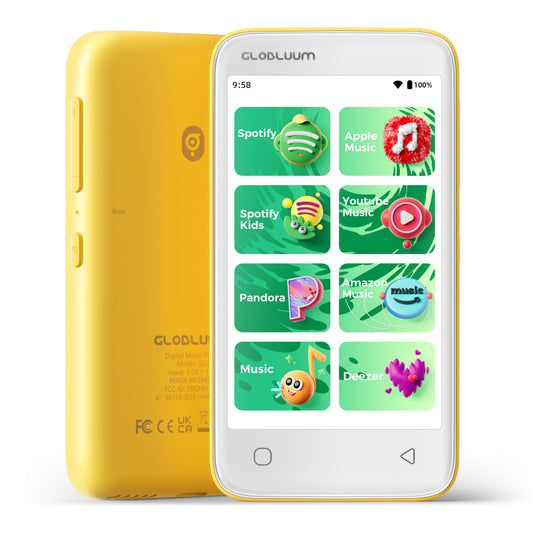
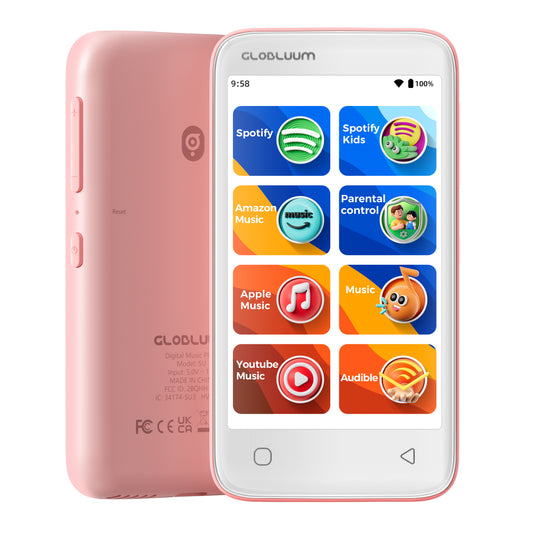
That’s why more learners, developers, and writers are switching to a dedicated music player.
🎁 How to Quickly Find More Playlists Like This
If you like this playlist, the easiest way is to search “Epic Study Playlist” on Spotify – you’ll find plenty of high‑quality public playlists built on the same idea. Or you can add the tracks above one by one to create your own custom version.
Sometimes the difference between a two‑hour study session and a four‑hour deep‑work marathon isn’t willpower – it’s what’s playing in your headphones.
👉 Click the link below to find out how to win a free dedicated music player and cash rewards.
Is there a song that instantly pulls you into focus? Share your study playlist on social media with #RizzMachine or email us at music@globluum.com. We’ll pick the best stories and give away a free dedicated music player!
Share Your Rizz
True focus isn’t about gritting your teeth. It’s about building a world where work and learning feel like a mission worth fighting for.