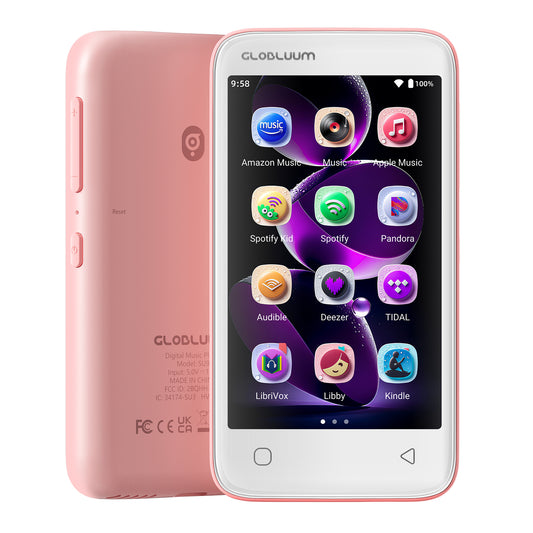
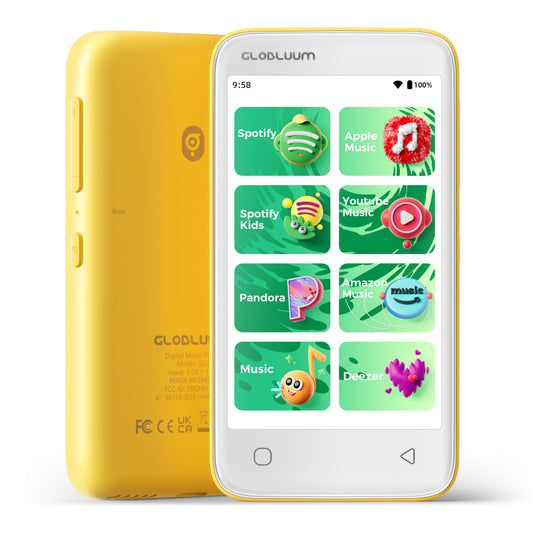
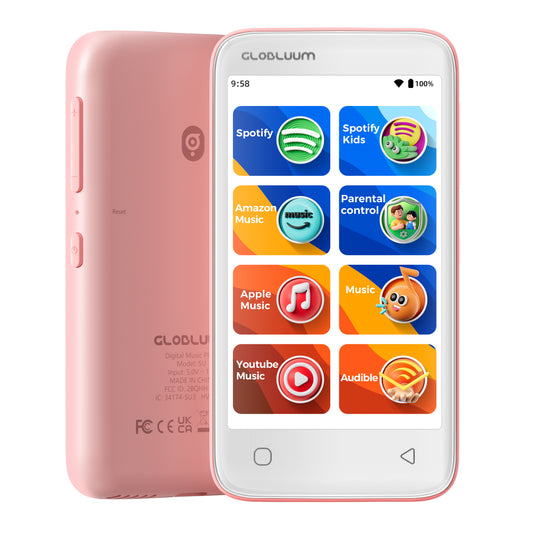
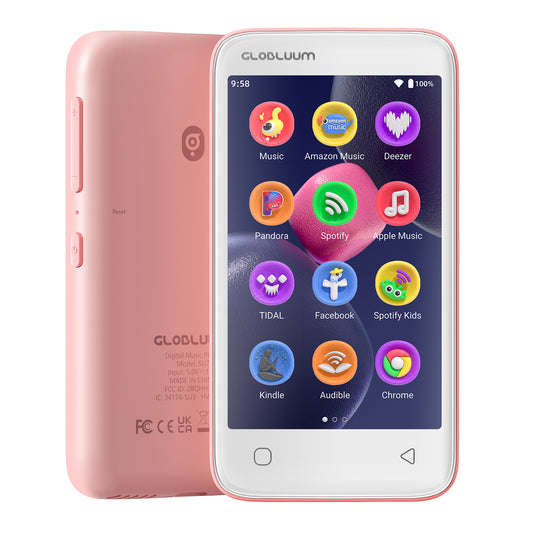
The Ultimate Travel Hack: Load Spotify & TIDAL Offline on a $69 Android MP3 Player
Share
Last fall, I took a real vacation. Two full weeks. No work emails, no Slack messages, no “urgent” calls. I rented an Airbnb in the mountains — surrounded by forest and streams, with spotty cell service at best. The place was nice, with a great speaker system in the living room. But internet? Basically non‑existent.
Before I left, I made one decision: leave my work laptop behind, and bring only a $69 Android MP3 player. I downloaded all my Spotify and TIDAL playlists offline ahead of time. Those two weeks turned into the most relaxing vacation I’ve had in nearly a decade. Here’s how I did it, and why this “travel hack” changed how I think about getting away.
Why a “$69 Android MP3 Player”?
You might think: why not just download offline on my phone? But on a vacation, your phone has bigger jobs: photos, navigation, emergency contact. Plus, I didn’t want to be tempted by work apps — just glancing at an email can break the relaxation spell.
A $69 Android MP3 player solves everything:
- It can’t run work apps (well, you could install them, but who logs into Slack on a $69 device?)
- It barely uses battery (26 hours of audio — charge once and it lasts days)
- Massive storage (up to 1TB with a microSD card — your entire music library fits)
- Cheap (drop it on a rock, get caught in rain, or drop it in a stream? No big deal)
Most importantly, this player takes over the music job completely. My phone sat quietly in my pocket, only used for photos and occasional maps.
Step 1: 30 minutes of prep before you leave
Two days before departure, I sat on my couch, connected to Wi‑Fi, and did this:
Spotify downloads:
- Created two vacation playlists:
- “Morning Cabin” (light music, folk, jazz for coffee time)
- “Forest Walk” (indie rock, electronic for hiking)
- Opened each playlist and tapped the download arrow. Waited for the green icon.
TIDAL downloads:
- Downloaded a few lossless albums: Max Richter’s piano, Miles Davis’s jazz, Enya’s Celtic music.
- Made a HiRes playlist specifically for “evening listening on the speakers.”
Storage: Everything went onto a 128GB SD card. The whole download took less than 30 minutes (depends on your playlist size). After downloading, I turned off Wi‑Fi to test — all good.
Step 2: Arriving at the mountain cabin — first impression
The last stretch of the drive had zero signal. Offline maps saved me. When I arrived, the host had left the keys. The place looked even better than the photos.
The living room had a nice speaker system (both Bluetooth and AUX). A small speaker in the bedroom too. I connected the player to the living room speakers and played that Max Richter album from TIDAL.
Piano notes slowly filled the room. Outside, a whole green valley. At that moment, I let out a long breath — the vacation had truly begun.
Step 3: Musical moments across two weeks
Early morning (6:30 - 7:30)
Wake up early. Brew coffee. Sit on the balcony. Play the “Morning Cabin” playlist on Spotify. Fog rises from the mountains, birds chirp along with the music. No notifications. No one reaching out. Just me and the view.
Daytime hiking (2-3 hours)
The trails were well marked. I picked a different route each day. Player in my jacket pocket, headphones on. Played “Forest Walk” — perfect tempo, not too loud, not sleepy. No signal on the trail? Who cares. It’s all offline.
Afternoon (1-2 hours)
Back at the cabin. Took lots of photos with my phone — plenty of battery left, because the player handled all the music. Sat in the yard, scrolled through photos, listened to lossless jazz on TIDAL. Sometimes just closed my eyes and did nothing.
Evening (1 hour before bed)
Connected the player to the living room speakers, low volume. Ambient music or classical. Outside, insects and wind. Inside, warm light and music. No TV, no social media. One night I even danced slowly to the music (no one saw — doesn’t matter).
Step 4: Why this combo is perfect for a mountain getaway
- No internet needed – Spotty signal? Irrelevant. All music lives on the SD card.
- Phone stays free – Phone is only for photos and offline maps. Battery lasts all day. Looking back at hundreds of beautiful photos, not a single one features the player — because it was quietly playing music in my pocket the whole time.
- Truly immersive – When you don’t have to “skip tracks,” “load playlists,” or “dismiss notifications,” you actually become part of the landscape. Music becomes part of the environment, not a device you fiddle with.
- Great speakers make it better – A nice rental with good speakers. Connect via AUX or Bluetooth. Lossless sound fills the room. That kind of immersion — you’ll never get it from a phone speaker.
Step 5: An unexpected gift — becoming part of the scenery
One evening, I sat on a large rock at the top of a hill. The player was streaming (well, playing offline) a classical guitar album from TIDAL. The sun was setting, the whole sky orange‑red. No human voices in the valley — just wind and music.
Suddenly, I didn’t feel like a “tourist” anymore. I felt like I belonged there. Like I was part of the landscape. The music wasn’t background — it was the bridge between me and nature.
In that moment, I understood what “getting away from it all” really means.
My phone captured the photo. But it couldn’t capture the feeling. And that feeling — a big part of it came from a $69 little player that put the right music in the right place.
A final tip
If you’re planning to go to the mountains, a lake, or anywhere with poor signal, try this setup:
- A cheap Android MP3 player (no need for flagship — as long as it runs Spotify and TIDAL)
- A large SD card (128GB or more)
- Download everything before you leave
- Comfortable headphones (or book a place with good speakers)
Then put your phone away. Use it only for photos. Don’t scroll. Don’t check anything. Just feel.
You’ll find that without the internet, you actually gain the whole world.
Globluum MP3 Player
Android 14 · Preloaded Google Play · Supports Spotify/TIDAL offline · Up to 1TB expansion · 26h audio battery · Vacation immersion essential