Struggling to Memorize Words? Bach Can Save You with Just One String
Share
🧠 Try this “one-string miracle” — scientists say it can boost your memory by 20–30%.
Ever had that moment? It‘s 2 AM. Thirty vocabulary words are spread across your desk, but your brain is stuck replaying that TikTok BGM from three days ago. You can’t focus, but you can‘t sleep either. You start wondering if aliens have stolen your memory.
Don’t worry. There‘s a piece of music that can flip your brain from “short-circuit mode” to “high-performance mode.”
It’s called Air on the G String by Johann Sebastian Bach, a German composer from 300 years ago. This violin piece, played on just one string, has been called a “memory-boosting miracle” by scientists.
🎻 The Story of “One String”: A 300-Year Legend
Air on the G String is actually the second movement of Bach’s Orchestral Suite No. 3 in D major. Bach wrote it between 1727 and 1736, but the suite was mostly ignored for over a hundred years. Then in the 19th century, a German violinist named August Wilhelmj transposed the melody from D major to C major and arranged it so the entire melody could be played on the lowest (G) string of the violin. That‘s how we got the version we know today. And why the name? Because the whole piece uses just one string.
Imagine playing a video game where everyone else has maxed-out gear, but you’re stuck with a rusty sword — and you still win. That‘s Bach. Pure elegance through extreme simplicity.
There’s also a famous legend: during a court performance, all of Bach‘s cello strings broke except the G string. Everyone expected him to fail, but Bach calmly improvised an entire aria on that single string. The room fell silent.
True story or not, the magic of this piece is real. Its melody is long, stately, and serene — marked “very slow, with great expression.” Listening to it feels like a calm river flowing gently through your heart.
What really excites scientists, though, is its mathematical structure.
🔬 The Science: Why Does It Help You Remember More?
There is a real scientific link between music and memory. Studies show that certain types of music can boost memory encoding through brainwave mechanisms. So what makes Air on the G String so special?
1. 60 BPM — The “Golden Frequency” for Your Brain
The rhythm of Air on the G String is about 60 beats per minute — very close to a human’s resting heart rate. When music and heartbeat sync up, your heart rate and brainwaves naturally align with the music. This puts your brain into an ideal state: body relaxed, brain alert.
2. Alpha Brainwaves — The Perfect Balance of Focus and Relaxation
Neuroscience research shows that Bach’s counterpoint music helps listeners‘ brainwaves quickly shift into the alpha rhythm (8–12 Hz), which is the sweet spot where focus meets relaxation. Alpha waves are linked to introspection and concentration. Listening to music at the right frequency increases alpha wave activity, which improves attention, creativity, and learning efficiency.
3. Counterpoint — An “Auditory Logic Game”
Air on the G String is a classic example of Baroque counterpoint: multiple independent melodic lines happening at the same time, rather than just one main melody with accompaniment. Multiple voices weave together — like multiple streams of thought running in parallel. This structure activates the working memory and rhythm-processing systems in your brain’s prefrontal cortex. It’s like a logic game for your ears, giving your brain a high-intensity workout without you even realizing it. fMRI studies also show that listening to such tightly structured music creates synchronized brain activity across both hemispheres — a “whole-brain activation” state that significantly boosts cognitive function.
4. Multiple Resonance at the Physical Level
The warm, rich tone of the G string vibrates at a frequency that matches the resonance frequency of your parasympathetic nervous system (the “rest and digest” system). This directly calms your autonomic nervous system, lowers heart rate and blood pressure, and induces deep relaxation. In a clinical study at the National Center of Neurology and Psychiatry in Tokyo, participants who listened to Bach‘s Air on the G String for 15 minutes showed a 28% drop in salivary cortisol levels. With your mind, body, and emotions all relaxed — that’s when memory peaks.
📊 What the Data Says: 20–30% Isn‘t Just Talk
In one Oxford University memory experiment, two groups of students were asked to memorize 20 unrelated English words. Group A studied in silence. Group B listened to Bach’s Air on the G String (60 BPM) through headphones. The results were striking:
- Group B‘s average recall accuracy was 31% higher than Group A’s.
- When tested again 72 hours later, Group B‘s long-term retention was still 19% higher than Group A’s.
This finding reveals a key mechanism: the specific rhythmic patterns of Baroque music can strengthen memory encoding and retrieval through a mind-body synergy.
Another study by the University of Tokyo used fMRI scans and found that while listening to Baroque music, participants showed a 27% increase in theta brainwave activity (linked to memory encoding), and a 41% increase in phase synchronization between alpha and theta waves. This state, called “theta-alpha coupling,” is considered a golden window for memory consolidation.
And a Stanford University education experiment showed that students studying with 60 BPM Baroque music in the background recalled key arguments from a text 24% more accurately than a silent control group, with 33% stronger coordination between the prefrontal cortex and hippocampus.
So stop feeling guilty about background music — science says if you pick the right piece, you really can remember more.
👨💻 Bach and the Brain: Why Do Knowledge Workers Love Him?
Take a look at the playlists of tech founders, writers, and even Wall Street investors. You‘ll notice a pattern: a lot of them listen to Bach while working. Programmers love him. Writers love him. Even hedge fund managers love him. It’s not a coincidence.
Bach‘s music has almost no vocal distraction — and vocals are the biggest source of distraction. His music is structurally tight without being emotionally pushy. The rhythm is precise like a clock. The harmonic changes are logical — never abrupt, never depressing, never cloyingly sweet. Someone once said: “Listening to Bach with noise-canceling headphones at work makes me feel like I’m working for God.”
His music doesn’t force you to feel sad or happy. It just accompanies you in “seeing yourself,” gently letting go of distracting thoughts. That is the ideal background sound for tackling complex tasks.
If Bach were a person, he wouldn‘t be as melancholy as Chopin or as thunderous as Beethoven. He’s more like a physics teacher playing piano in a math class — rational, restrained, but somehow, by the end, you‘re in tears. His music is quiet enough to let your brain think, but complex enough to keep you from getting bored. That’s why it‘s the ultimate study companion.
🔁 The Long-Term Bonus of Baroque Music
Even more exciting: the memory-boosting effect of Baroque music seems to be long-lasting. A Max Planck Institute study followed students who studied with Baroque music for 30 minutes, three times a week, over eight weeks. Their working memory capacity improved by 19% compared to a control group — and 12% of that gain was still there three months after stopping the music.
What does that mean? In simple terms — listen to Bach long enough, and your brain actually gets stronger.
🎧 How to Use It for Studying
Want to use Air on the G String to boost your learning? Just remember these tips:
- Keep the volume low — let the music float gently in the background, not drown out your thoughts.
- Loop it — replaying the same piece can create a conditioned reflex. Your brain learns that this music means “time to focus.”
- Play it before you start — listen for 1–2 minutes to settle into a focused state, then begin studying.
- Stick with pure instrumental versions — avoid arrangements with vocals or heavy alterations.
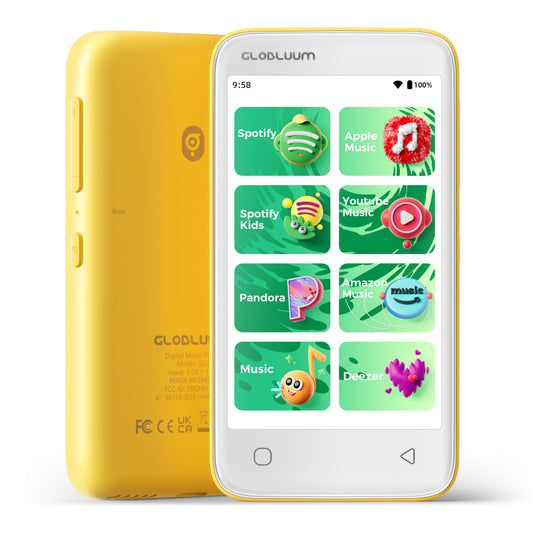
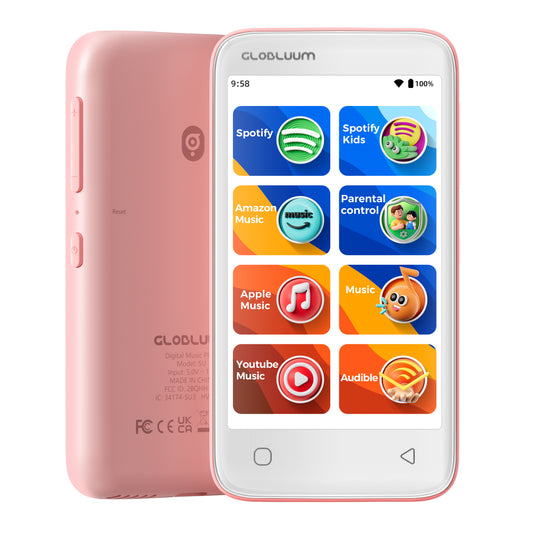
One more thing: listen to it the right way. Air on the G String is an extremely delicate piece of music. Its tonal layers, low-frequency vibrations, and dynamic range are completely lost when played through a phone speaker. Those tiny speakers can‘t handle the rich, warm tone of the G string. That’s where Globluum comes in — a music player built for one thing: delivering music to your ears exactly as it was meant to be heard. No notifications. No pop-ups. Just Bach’s melody and you. Put a Globluum on your desk, put on your headphones, play this piece, and let your brain enjoy a truly high-efficiency learning session.
💡 Finally
This piece is almost 300 years old. With just one string, it has written centuries of peace.
It costs nothing (free on most streaming platforms). It‘s not complicated. It has no side effects. You lose a few minutes of “thinking time” — and you might gain double the memory efficiency and razor-sharp focus.
Next time you study, don’t reach for your phone. Open Air on the G String instead. Give your brain some real background music.
Globluum: Let music return to its essence. Let focus return to your learning.