Does Your Child Get Distracted While Doing Homework? This “Focus Playlist” Might Work Better Than Yelling
Share
Don’t rush to take away the headphones — the right sound can actually help build a “castle of concentration” for your child.
“Mom, can I listen to some music while I do my homework?”
“No! Focus on your work!”
— Does this sound like a daily script in your home?
Most parents instinctively say no to music during homework time. But let’s look at it differently: if your child is in a noisy home environment (TV blaring, a younger sibling screaming, kitchen chopping sounds…), absolute silence can sometimes be a luxury.
And here’s what recent brain science tells us: the right kind of sound can actually act as a scaffold for focus, especially for children who are easily distracted.
The key is — what to listen to, and how to listen.
In this article, I’ll break down the science of background music in a clear way, and give you a ready‑to‑use “homework music playlist.” And of course, we’ll also talk about why a dedicated music player might be a much better choice than a smartphone.
🧠 Why Does Some Music Help Kids Focus? It’s Not Magic — It’s Neuroscience
Let’s start with a term you may not have heard of: Stochastic Resonance.
In simple terms, the brain needs a certain level of background noise to filter out irrelevant distractions. An absolutely silent environment can actually make the auditory cortex too sensitive — a sudden door slam from next door can make your child jump.
A steady, predictable, low‑volume background sound — like rain, or slow instrumental music without lyrics — acts like an “acoustic shield.” It masks those sudden noises, allowing the brain to comfortably focus on homework.
Even more interesting: music around 60 beats per minute (roughly your resting heart rate) has been shown in multiple studies to help guide the brain into an Alpha Wave state. This brainwave pattern is strongly associated with “relaxed alertness” — that ideal learning state where you’re neither tense nor drowsy, but deeply focused.
Many Baroque compositions — by Bach, Handel, Vivaldi — naturally fall into this tempo range. That’s why they’re often recommended as study background music.
In one sentence: the music isn’t meant to be “listened to” — it’s meant to be “felt.”
As soon as a child starts singing along or gets caught up in lyrics, it becomes a distraction.
🎶 A Homework‑Friendly Music List, Sorted by Task Type
Not all homework benefits from the same music. I’ve divided common assignments into three categories, with recommendations for each.
1. Math, Coding, Logic & Reasoning – Deep Focus Needed
Best fit: Ambient, Minimalist Classical, Instrumental Lo‑fi Hip Hop
These tasks demand full use of working memory. Lyrics directly compete for language processing — they’re the biggest enemy.
Recommendations:
- Brian Eno – Music for Airports: The pioneer of ambient music. It exists like air — you barely notice it.
- Max Richter – Sleep: Written for sleep, but its slow, repetitive, gentle structure works beautifully for deep concentration.
- Lo‑fi Hip Hop streams/playlists: Search “lofi hip hop study beats” on YouTube or Spotify. Those lo‑fi, slow‑tempo, lyric‑free electronic beats are especially popular among students in the US and Europe.
🎧 Tip: Set the volume just loud enough to cover background noise — roughly the hum of a refrigerator.
2. Reading, Writing, History – Needing Emotional Flow
Best fit: Film Scores, Classical Piano, Solo Jazz
Language‑based tasks benefit from a bit of emotional atmosphere to spark association — but still without lyrics.
Recommendations:
- Joe Hisaishi – Merry‑Go‑Round of Life, Castle in the Sky (piano versions): Beautiful melodies that don’t steal the show.
- Yiruma – River Flows in You: One of the most famous “homework anthems” among Western parents.
- Bill Evans – Peace Piece: Lonely yet warm jazz piano — helps a child settle down and write that book report.
3. Copying, Memorization, Drills – Fighting Boredom
Best fit: Instrumental Electronic Dance Music, Rhythmic World Music, Baroque
When the task is repetitive and prone to causing drowsiness, a steady rhythm acts like a pacemaker, carrying the child forward.
Recommendations:
- Bach – Fugue in G minor: Its tight contrapuntal structure subtly increases mental energy.
- Daft Punk – Tron: Legacy soundtrack: Electronic symphonic music — propulsive but vocal‑free.
- Ryuichi Sakamoto – Merry Christmas Mr. Lawrence (piano solo): Rhythmic yet warm.
🌧️ An Often Overlooked Option: White Noise & Nature Recordings
Some children — especially those who are highly sensitive to sound — find even instrumental music a burden. What then?
Try white noise or nature recordings.
- Steady drizzle: Masks low‑frequency noise (like traffic).
- Gentle stream: Soft high frequencies that aren’t piercing.
- Library page‑turning + distant footsteps: Some websites capture real library ambience — perfect for simulating a “everyone is quietly studying” atmosphere.
You can customize frequencies for your child at MyNoise (free), or search for “brown noise” (deeper than white noise, often recommended for those with ADHD).
📱 Why Smartphones Are Bad “Homework Music Players”
At this point you might think: all these playlists are on Spotify — why not just let my child use a phone?
That’s exactly the point — the smartphone is Public Enemy #1 for focus.
- Notification assault: One iMessage or TikTok alert can shatter hard‑won concentration. And kids almost never ignore them.
- Screen temptation: The phone is right there — “just reply to one message,” “just watch one short video” — and suddenly half an hour is gone.
- Poor audio quality: Phone speakers or basic Bluetooth headphones lack the resolution to reproduce subtle details in ambient music. The sound becomes a mushy blur, which actually irritates the brain.
That’s why many Western parents are returning to dedicated music players — like the ones we’ve been making.
A good DAP (Digital Audio Player) offers:
- Zero distractions: No notifications, no social apps, no web browser. It does one thing: plays music.
- Parent‑controlled: You load the playlists. Your child only listens to what you’ve curated.
- High‑resolution sound: When your child uses a decent pair of headphones and hears every voice in a Bach fugue with clarity, or the three‑dimensional texture of raindrops on different leaves — that experience makes them far more willing to choose background listening over doom‑scrolling.
This isn’t mysticism. When sound is detailed enough, the brain doesn’t have to work hard to fill in missing pieces — and focus becomes easier.
📝 A Quick Summary for Parents
- Identify the task type first – Deep thinking calls for melody‑free ambient sound; repetitive tasks can take rhythmic instrumental music.
- Volume: less is more – The rule of thumb: your child knows music is playing but doesn’t actively listen to it.
- Create a ritual – Before starting homework, let your child put on headphones and press “play” on the music player. That act itself is a psychological trigger for “study mode.”
- Rotate the playlist regularly – Listening to the same music for too long turns it into “auditory wallpaper” — it becomes fatiguing and ineffective. Swap it out every week or two.
- Respect your child’s feedback – If your child clearly says “I work better in silence,” then play nothing. There’s no one‑size‑fits‑all — only what works best for your child.
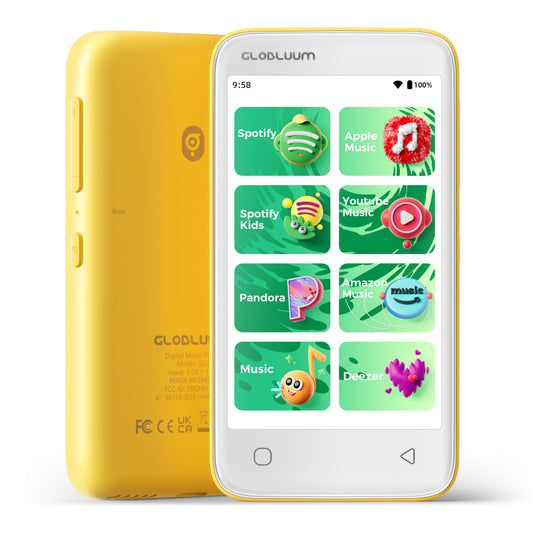
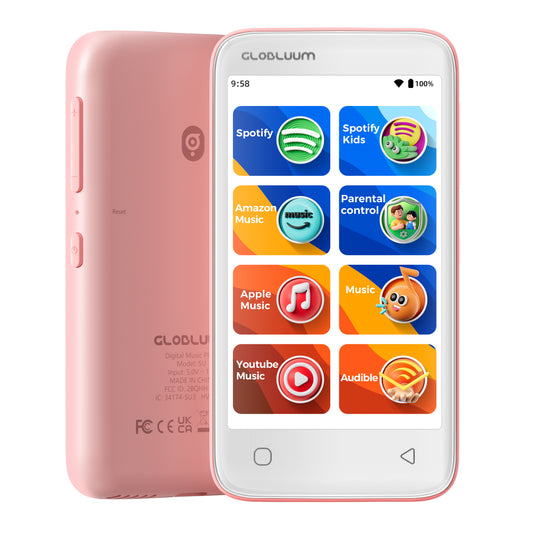
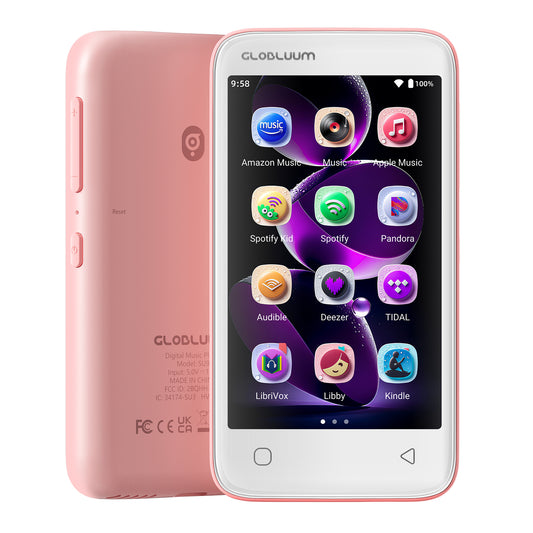
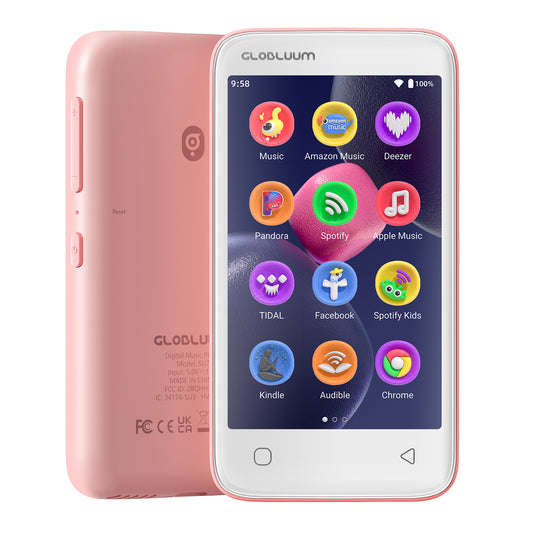
If you’re looking for a solution that gives your child high‑quality background music without any risk of distraction, check out our SU Series Android Music Player:
- No notifications, no social media, no browser (all apps are parent‑controllable)
- A player designed entirely for “study mode” (plays only the playlists you preset)
- Supports up to 1TB of storage — enough for an entire semester’s worth of focus
Because sometimes, what your child needs isn’t stricter discipline, but a cleaner space for sound.
Let music return to its rightful place — a friend to focus, not an accomplice to distraction.
🎁 A Final Gift
Have you tried any “homework music” playlists at home? Or does your child have a unique study habit? Share it on social media with #RizzMachine or email us at music@globluum.com for a chance to win a free unit.
👉 Want a chance to get your player for free plus cash rewards? Click below to learn how.
Share Your Rizz