The Best Spotify Player with Screen: A Mini Device for Offline Music
Globluum's Pick: Deep Work & Study Music – Saman by Ólafur Arnalds
Most music tries to capture your attention.
Saman does the opposite.
Built around a single piano and an extraordinary sense of restraint, the piece unfolds with patience, silence, and space. There are no dramatic crescendos, no sudden emotional turns, and no attempt to keep you entertained.
That is precisely what makes it so powerful.
In an age where every app, notification, and algorithm is competing for your focus, Saman feels like a quiet act of resistance. It doesn't demand your attention—it gives it back.
Whether you're reading a difficult book, writing an important report, or simply trying to spend an hour away from your phone, this is the kind of music that gently fades into the background and allows your own thoughts to take center stage.
Sometimes focus isn't about pushing harder.
Sometimes it's about creating enough silence for your mind to hear itself again.
Most people today have already realized something important:
Social media is consuming more of our time than we'd like to admit.
We know it.
We open Instagram, TikTok, or YouTube intending to take a five-minute break.
Then we look up and realize thirty minutes have disappeared.
But the real problem runs deeper.
Many people are beginning to notice a quiet but unsettling change within themselves.
It's becoming harder to focus.
Harder to read for long periods of time.
Harder to stay immersed in work that requires sustained attention.
A report that once took an hour now feels exhausting.
A book that once felt engaging now struggles to hold attention.
A creative project that requires deep thinking suddenly feels intimidating.
People know their phones are contributing to the problem.
Yet they can't seem to let them go.
This is one of the great paradoxes of the digital age:
The thing we rely on most is often the thing that hurts us the most.
Many have tried to fight back.
They turn off notifications.
Delete social media apps.
Set screen-time limits.
Install productivity tools.
But the results rarely last.
Eventually, many discover a surprisingly simple solution:
Put the phone farther away.
No complicated system.
No willpower battle.
No digital detox challenge.
Just place your phone on the other side of the room.
Or even in another room entirely.
Every time you feel the urge to check it, you'll have to stand up and walk a few extra steps.
It sounds insignificant.
But those few steps create something powerful:
A pause.
A moment of friction.
A small space between impulse and action.
And within that space, a question naturally emerges:
"Do I really need my phone right now?"
Sometimes the answer is yes.
Most of the time, it's no.
You turn around and return to your work, your reading, or your thoughts.
That tiny physical distance helps transform unconscious phone-checking into conscious phone use.
And in many ways, the growing popularity of dedicated music devices follows the same principle.
They aren't designed to replace smartphones.
They're designed to create distance.
Distance between you and distraction.
Distance between music and everything competing for your attention.
A space where music can simply be music again.

Why Are More People Looking for a Spotify Player with a Screen?
If you've searched for terms like:
- Spotify Player with Screen
- Portable Spotify Player
- Offline Spotify Player
you're probably not new to Spotify.
In fact, most people searching for these terms are already loyal Spotify users.
They have a smartphone.
They have wireless earbuds.
They have Spotify Premium.
They already own all the technology they need.
Yet they're still looking for another device.
Why?
Because today's smartphone is no longer just a music player.
It's also:
- A social media hub
- A notification center
- A news feed
- A shopping platform
- An entertainment machine
Every time you open Spotify, you're only one tap away from Instagram, TikTok, email, YouTube, and countless distractions.
The problem isn't music.
The problem is that music and distraction now live inside the same device.
Why a Screen Still Matters
Some people assume that if the goal is reducing distractions, a screen isn't necessary.
But Spotify was built around a visual experience.
Users naturally expect to:
- Browse album artwork
- Search for songs
- Explore playlists
- Manage libraries
- Discover podcasts
A screen makes all of these interactions intuitive and enjoyable.
Without one, the experience often feels like stepping back twenty years.
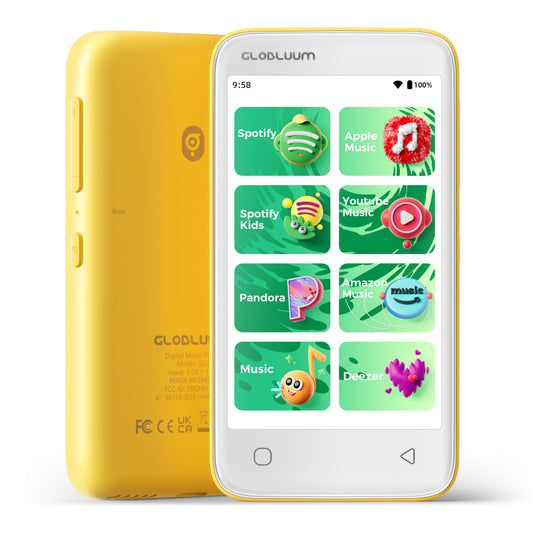
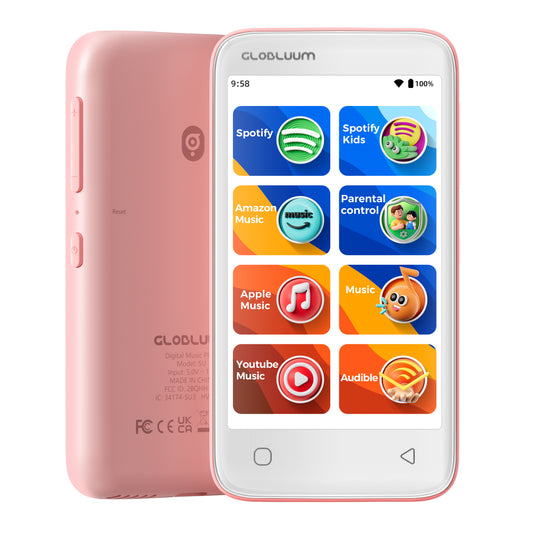
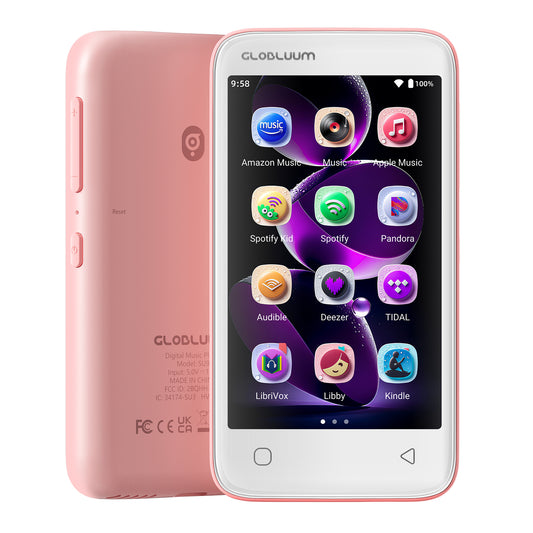
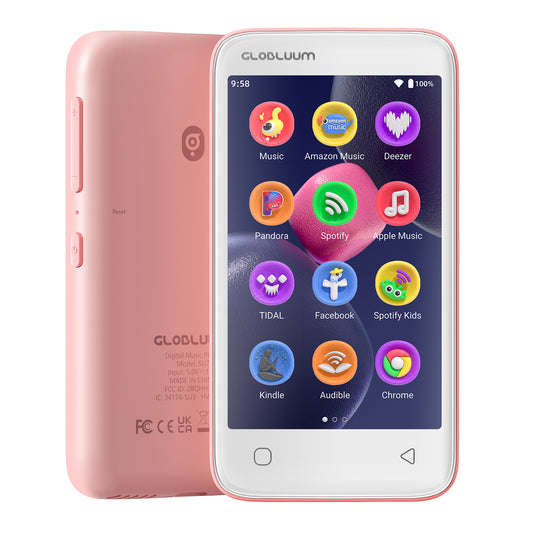
A Spotify player with a screen preserves the simplicity of a dedicated music device while keeping the convenience modern streaming users expect.
It allows you to enjoy Spotify without carrying the full weight of a smartphone experience.
Offline Music: The Feature People End Up Loving Most
Many buyers initially focus on one question:
"Can this device run Spotify?"
But after using it for a while, they often discover that another feature becomes even more valuable:
Offline music.
Because real life doesn't always come with reliable internet.
Imagine it's 8:00 a.m. on a Monday morning in New York City.
You're riding the subway from Brooklyn into Manhattan.
Your favorite Spotify playlist is playing.
The train enters a tunnel.
The signal disappears.
And suddenly, the music stops.
For New Yorkers, that's a familiar experience.
Offline listening solves the problem completely.
Download your playlists ahead of time.
Whether you're commuting, flying across the country, or traveling internationally, your music stays with you.
No signal required.
No buffering.
No interruptions.

What Makes a Great Spotify Music Player?
Not every music player is designed for modern Spotify users.
If you're looking for a dedicated Spotify device, here are a few features worth considering.
Native Spotify Support
A true Spotify player should run Spotify directly without relying on a phone for control.
Reliable Wi-Fi Connectivity
Essential for logging in, syncing playlists, downloading music, and updating apps.
Sufficient Storage
Today's listeners don't just download music.
Many also save:
- Podcasts
- Audiobooks
- Language-learning courses
Storage quickly becomes more important than most people expect.
Expandable Storage
MicroSD card support provides flexibility for users with large offline libraries.
Responsive Touchscreen
A touchscreen makes browsing playlists, searching songs, and managing music feel natural and effortless.
The Real Goal Isn't Buying Another Device
Most people think they need more discipline.
In reality, they often need a better environment.
Behavioral science has repeatedly shown that human behavior is shaped less by willpower and more by surroundings.
If your phone is always within reach, checking it becomes almost automatic.
If distractions are always available, distraction becomes the default.
The solution isn't necessarily to become more disciplined.
The solution is to make good habits easier and bad habits harder.
Keep books within reach.
Create spaces designed for reading, thinking, and focused work.
Use dedicated devices for activities that matter.
Then do the opposite for distractions.
Put your phone farther away.
Remove temptations from immediate reach.
Create friction where it matters.
Because in many cases, personal growth isn't about forcing yourself to become better.
It's about creating an environment where better choices become easier than worse ones.
A dedicated Spotify player fits naturally into that philosophy.
Final Thoughts
For most people, a smartphone will remain the most convenient way to listen to music.
But convenience and quality of experience are not always the same thing.
The growing interest in dedicated Spotify players isn't really about technology.
It's about attention.
It's about creating space for focus.
It's about reducing unnecessary distractions.
And it's about enjoying music in a way that feels intentional again.
If a small Spotify player with a screen can help you:
- Stay focused while working
- Enjoy uninterrupted music during your commute
- Reduce your dependence on your phone
- Create healthier digital habits
Then its value goes far beyond music playback.
Because what you're really buying isn't just another device.
You're buying a different relationship with technology.
One that gives your attention back to where it belongs.